You found it. The house that made you stop scrolling.The kitchen works. The location works. You can picture your furniture in the living room. You've already figured out where the dog bed

Dated: August 21 2026
Views: 65
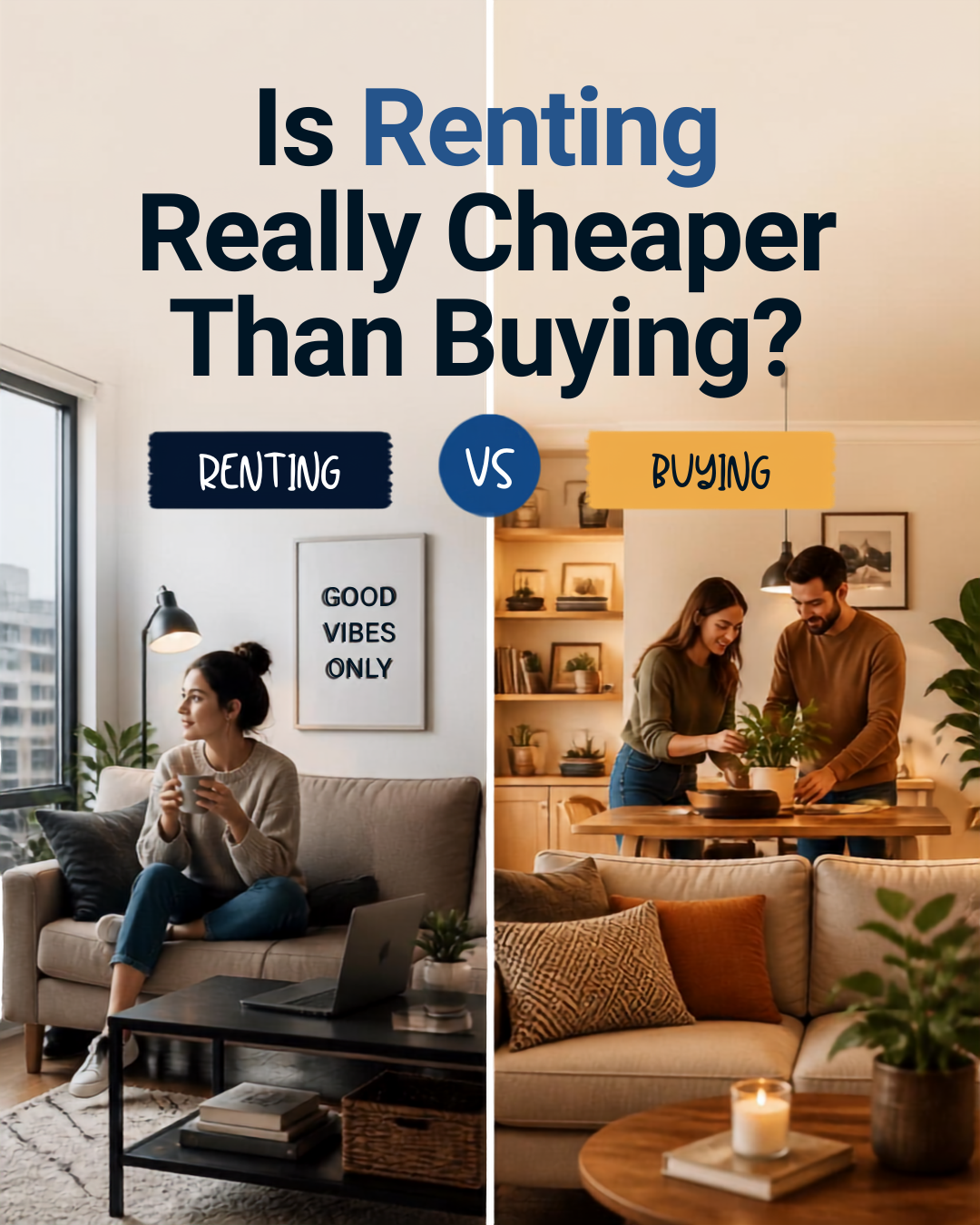
If you're renting right now and thinking about buying a home, you've probably asked yourself:
Wouldn't it be cheaper just to keep renting?
Maybe.
And if you were expecting a REALTOR® and mortgage loan officer to automatically tell you that buying is better, I'm probably going to disappoint you.
Sometimes renting is the smarter financial decision.
But comparing a $2,000 rent payment to a $2,000 mortgage payment doesn't tell you which one is actually cheaper.
There are costs and benefits on both sides of the equation.
So instead of asking:
“Is renting cheaper than buying?”
I think there's a better question:
“What does it actually cost me to rent versus own, and what do I get in return for each?”
That's the calculation that matters.
Let's start with something that sounds obvious but gets overlooked all the time.
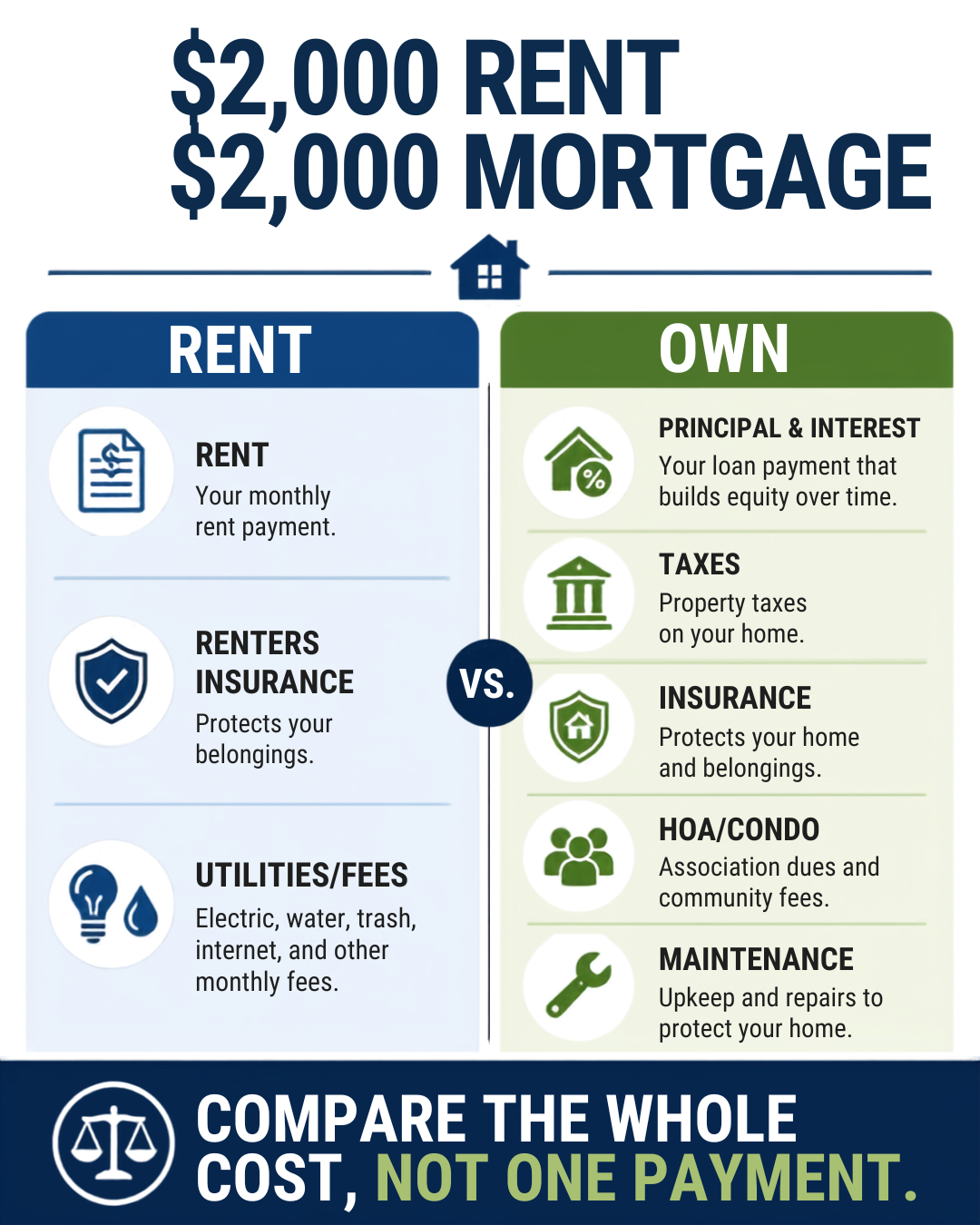
If your rent is $2,000 per month and a mortgage calculator shows a $2,000 payment, that does not mean owning and renting cost the same amount.
Your rent may include some utilities, maintenance, property taxes and building expenses.
When you own, those responsibilities become yours.
A homeowner may need to account for:
Mortgage principal and interest
Property taxes
Homeowners insurance
Mortgage insurance, when applicable
HOA or condo fees, when applicable
Utilities
Maintenance and repairs
The Consumer Financial Protection Bureau specifically recommends looking beyond principal and interest when comparing renting with owning because these additional expenses can substantially change the real monthly cost of homeownership.
So no, I don't want to convince you that:
$2,000 rent = $2,000 mortgage.
It doesn't.
I want to know what both actually cost you.
This is where the conversation gets more interesting.
Let's say renting costs less per month.
That doesn't automatically mean renting is the better financial choice.
And if owning costs less per month, that doesn't automatically mean buying is the better choice either.
Why?
Because we also need to ask:
What are you getting in exchange for the money?
Rent provides something extremely valuable: a place to live.
It can also provide flexibility.
If the water heater breaks, you're probably calling the landlord.
If your job might relocate you next year, a lease may make much more sense than buying a home.
And you aren't taking on the financial risk of owning the property.
Those things have value.
Homeownership offers something different.
Part of your mortgage payment may reduce the principal balance you owe. Over time, that can help you build equity.
If the property appreciates, your equity may grow further, although appreciation is never guaranteed.
And eventually, a homeowner can own an asset outright.
That's why simply comparing two monthly payments doesn't answer the question.
If you've talked to me about buying a home, you may have heard me say:
“Rent feels a lot like paying 100% interest.”
I know that's a provocative way to say it, so let me explain what I mean.
It is not a literal financial calculation. Rent and mortgage interest are not the same thing.
When you pay rent, you're purchasing housing, flexibility and freedom from many of the responsibilities of ownership.
But at the end of your lease, none of those rent payments reduced the balance on an asset you own.
If you paid $2,000 a month for a year, that's $24,000 spent on housing.
You received something valuable, housing for a year, but you don't own part of the apartment because you paid the rent.
With a mortgage, part of the payment can reduce the balance you owe on an asset you own.
That's the distinction I'm trying to make.
Let's get this out of the way because I don't think enough real estate marketing says it:
If you're likely to move again in a year or two, buying may not make sense.
If purchasing would empty your savings account and leave you without emergency reserves, we may need to wait.
If your employment or income is unstable, renting may give you flexibility you need right now.
If the only homes you can afford require a commute or lifestyle you're going to hate, I'd rather help you create a plan than convince you to buy the wrong house.
And if the true cost of owning substantially exceeds renting in your situation, that's something we need to see in the numbers.
CFPB specifically notes that renting may make more sense when employment is unstable or there's a reasonable chance you'll move within the next few years.
I don't think everyone should buy a house.
I think everyone who wants to own a home should understand whether buying makes sense for them.
I like to start with five questions.
Not just the number on the lease.
Let's look at:
Rent.
Parking.
Pet rent.
Utilities that aren't included.
Renters insurance.
Amenity fees.
And anticipated rent increases.
Then let's calculate what housing is actually costing you over the next several years.
Now we do the same thing on the ownership side.
We don't just plug a price into a calculator and look at principal and interest.
We estimate the complete monthly housing expense.
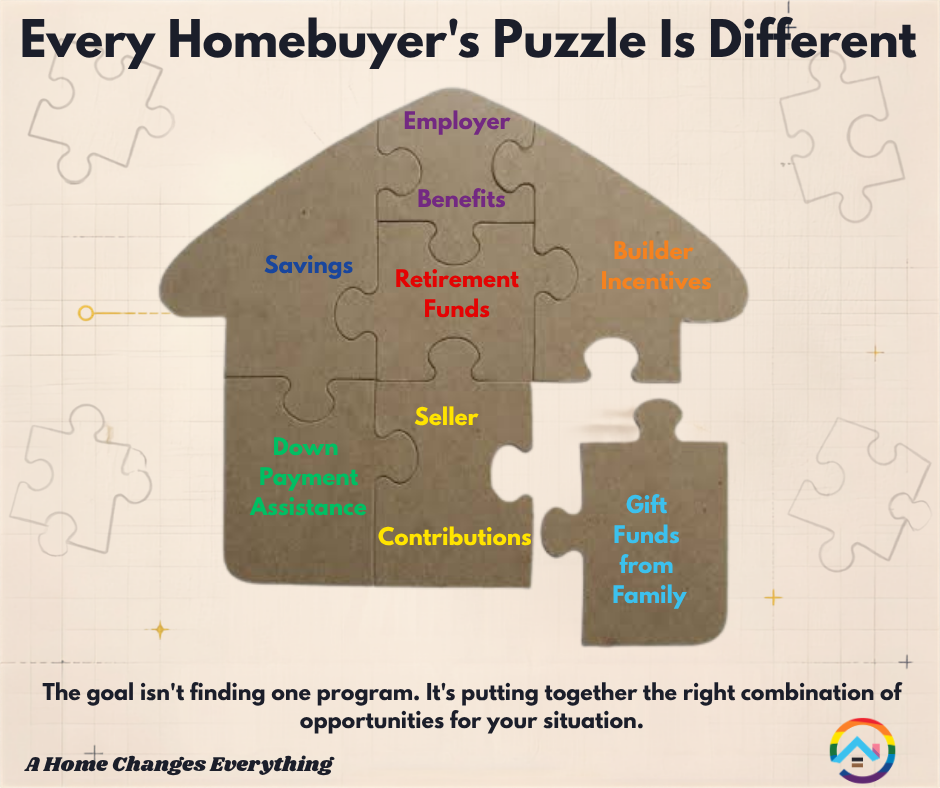
The amount needed to purchase isn't necessarily coming from one giant savings account.
Depending on the buyer and property, we may be looking at some combination of:
Your savings
Down payment assistance
Employer homebuying benefits
Builder incentives
Seller contributions
Gift funds
Other eligible resources
So before deciding that renting is your only affordable option, let's find out what opportunities might actually be available.
This is where I want to get out of hypothetical numbers.
If we calculate that a certain monthly payment is comfortable, what does that actually buy in Baltimore? Prince George's County? Washington, DC? Northern Virginia? Pennsylvania?
Don't guess.
Look.
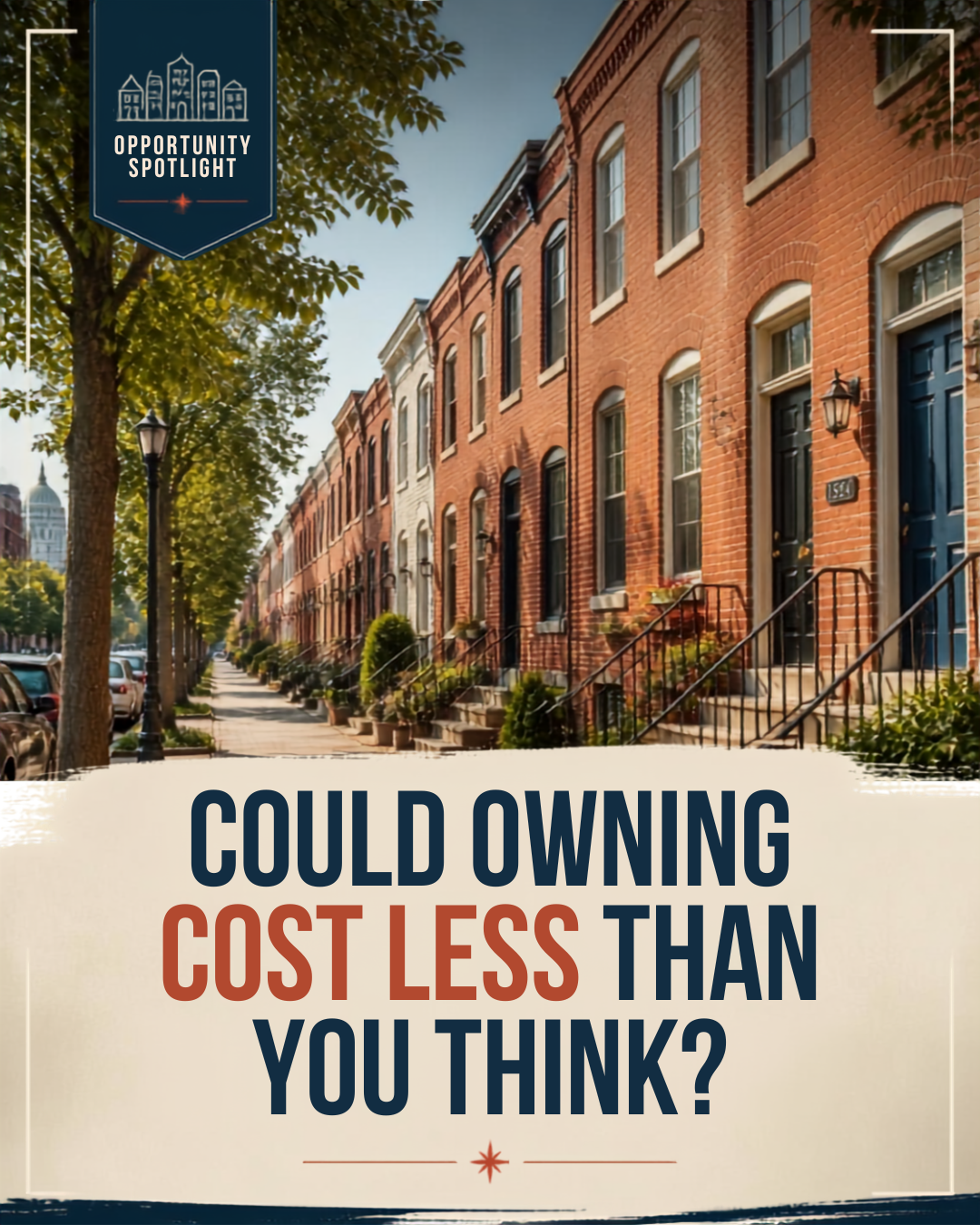
Baltimore is a great example of why a national “rent vs. buy” calculator can only tell you so much.
A calculator doesn't necessarily know that a particular buyer may qualify for local homeownership incentives.
It doesn't know whether an employer might provide homebuying assistance.
It doesn't know whether a seller is willing to contribute toward closing costs.
And it doesn't know the difference between buying a condo with a substantial monthly fee and a rowhome without one.
That's why I want buyers to use calculators as a starting point, not an answer.
For someone renting in Baltimore, the real question isn't:
“Is renting cheaper than buying nationally?”
It's:
“What does renting cost me, what could I realistically buy here, and what opportunities could change my numbers?”
That's a much more useful conversation.
There's one more variable that can completely change the answer.
How long are you going to stay?
Buying and selling real estate involves transaction costs.
Homeownership also tends to build equity gradually, particularly in the early years of a mortgage.
If you're buying a home you expect to sell 12 months from now, the math can look very different from buying a home you expect to own for seven, ten or twenty years.
That's one reason I'm reluctant to make blanket statements like:
“Buying is always better than renting.”
It isn't.
Your timeline matters.
This is another place where I want to be careful.
Real estate can appreciate over time.
Historically, homeownership has helped many American households build wealth.
But I am never going to build your entire homebuying strategy around:
“Don't worry; the house will go up in value.”
We don't know that.
Markets change. Individual properties perform differently. Your home can increase or decrease in value. I want the purchase to make sense based on what we reasonably know today.
Potential appreciation is an opportunity.
It isn't a guarantee.
Then we need to understand how much more and what you're getting for it.
Suppose renting costs $2,000 a month and owning the home you actually want would cost $2,350 after we've accounted for the full payment.
That $350 difference matters.
But so do these questions:
How much of the mortgage payment is reducing principal? How much might your rent increase over the next several years? How long do you expect to stay? Do you value being able to renovate, have pets without landlord restrictions, or create more stability for your family? Could assistance reduce the upfront cost of buying? Could a seller contribution change your cash-to-close?
Would that additional $350 make your monthly budget uncomfortable?
There isn't one universal answer.
There's your answer.
This is the biggest thing I want you to take away from this article.
Don't ask:
Ask:
Those aren't the same question.
Renting may give you flexibility and lower short-term costs.
Owning may give you stability, control over your home and the opportunity to build equity over time.
Both have costs. Both have benefits. And neither is automatically right for everyone.
If you're wondering whether renting or buying makes more sense for you, don't start with a sales pitch.
Start with numbers.
First, use our:
Then take a look at:
If the numbers start looking interesting, the next question becomes:
And if you've run through all of that and you're thinking:
“Okay Jane, I need someone to actually help me put these pieces together.”
It depends on the property, location, financing, length of ownership and your individual finances. Compare the complete cost of renting with the complete cost of owning rather than comparing rent with only the mortgage principal and interest payment.
No. Rent pays for housing and often provides flexibility and freedom from many maintenance responsibilities. However, rent payments generally don't build ownership in the property you're renting.
There isn't one number that works for everyone. Transaction costs, market conditions, financing and potential changes in property value all affect the calculation. If you're likely to move again within only a few years, renting may deserve serious consideration.
Not necessarily, and not necessarily not. Compare the complete costs and benefits of both choices, determine whether the ownership payment fits comfortably within your budget, and consider how long you expect to remain in the home.

Jane HuelleREALTOR® | Mortgage Loan Officer | Homeownership AdvocateA Home Changes Everything.Because homeownership is more than buying a house—it's building your future.I didn't choose real....
You found it. The house that made you stop scrolling.The kitchen works. The location works. You can picture your furniture in the living room. You've already figured out where the dog bed
How Much Money Do I Actually Need to Buy a House in Baltimore?The simple answer? I usually tell buyers to plan for roughly 10% of the purchase price but that does NOT mean you need a 10% down.
What Credit Score Do I Need to Buy a House in Baltimore?Your credit score matters—but it isn't a pass/fail grade for homeownership.One of the most common things I hear from future homebuyers:
How Much House Can I Actually Afford in Baltimore?If you're thinking about buying a home in Baltimore, you've probably typed some version of this into Google:“How much house can I afford?;
Should you require assistance in navigating our website or searching for real estate, please contact our offices at 301-381-1855.

 © BRIGHT, All Rights Reserved
Information Deemed Reliable But Not Guaranteed
The data relating to real estate for sale on this website appears in part through the BRIGHT Internet Data Exchange program, a voluntary cooperative exchange of
property listing data between licensed real estate brokerage firms in which
participates, and is provided by BRIGHT through a licensing agreement.
The information provided by this website is for the personal,
non-commercial use of consumers and may not be used for any purpose other than to identify prospective properties consumers may be interested in purchasing.
Data last updated: September 23, 2026 3:16 PM UTC
Some properties which appear for sale on this website may no longer be available
because they are under contract, have Closed or are no longer being offered for sale.
Some real estate firms do not participate in IDX and their listings do not appear on this website. Some properties listed with participating firms do not appear on this website at the request of the seller.
Show More...
